1. 问题描述
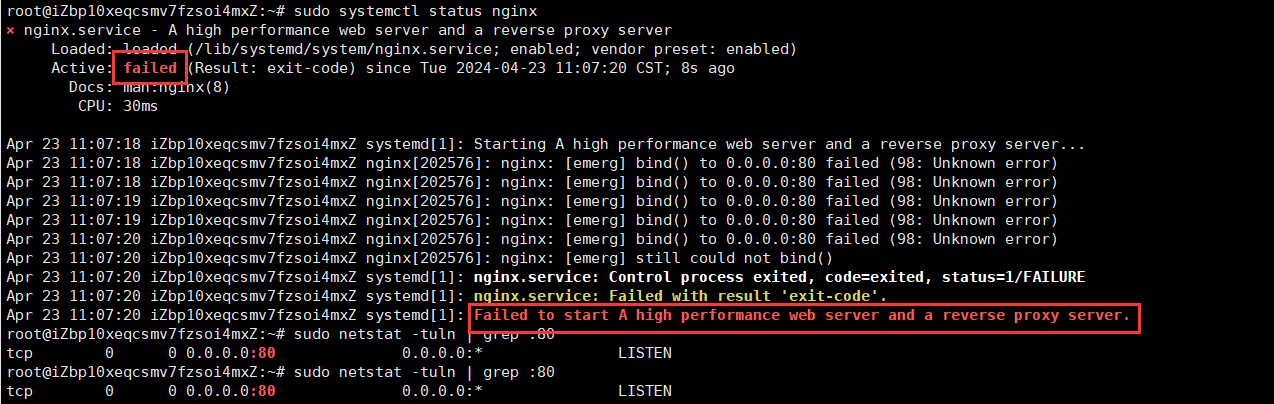
在启动nginx服务的时候显示内容如下:
|
1 |
sudo systemctl status nginx |
问题出现原因:
根据日志显示,Nginx 服务启动失败,主要原因是无法绑定到端口 80。这通常是由于该端口已被
其他进程占用而导致的。
2. 解决方案
要解决此问题,可以执行以下步骤:
确认端口 80 是否被其他进程占用。可以使用以下命令检查:
|
1 |
sudo netstat -tuln | grep :80 |
该命令会列出正在监听端口 80 的进程。如果有其他进程在使用该端口,显示如下:

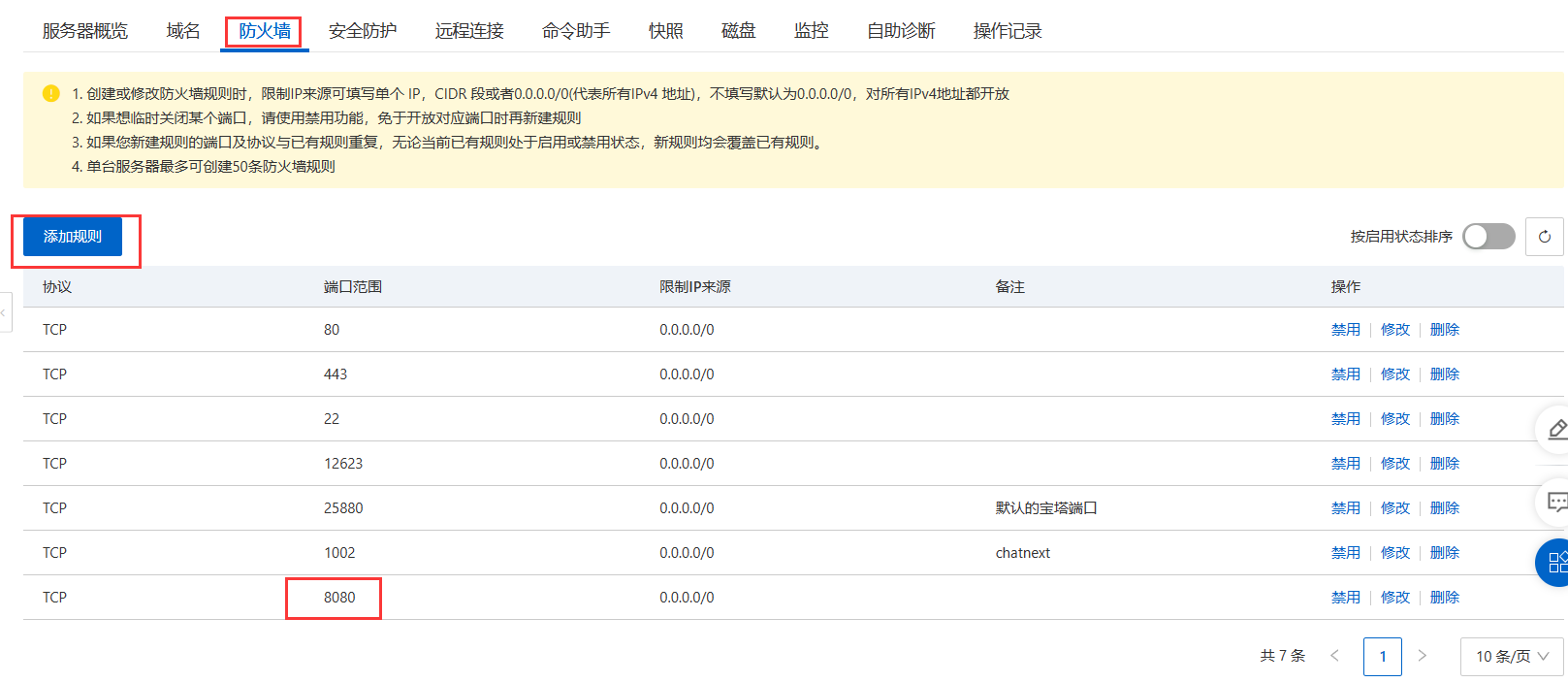
打开配置文件:可以将80端口【默认端口】修改为 8080 端口【当然也可以是其他的,不过要记得去防火墙添加规则(即添加端口)】
比如我添加的是 8080 端口,则添加规则如下(红框内容):
可以使用以下命令打开配置文件:
|
1 |
sudo nano /etc/nginx/sites-available/* |
我的配置文件内容如下【版本不同当然配置文件不同】:
|
1 2 3 4 5 6 7 8 9 10 11 12 13 14 15 16 17 18 19 20 21 22 23 24 25 26 27 28 29 30 31 32 33 34 35 36 37 38 39 40 41 42 43 44 45 46 47 48 49 50 51 52 53 54 55 56 57 58 59 60 61 62 63 64 65 66 67 68 69 70 71 72 73 74 75 76 77 78 79 80 81 82 83 84 85 86 87 88 89 |
## # You should look at the following URL's in order to grasp a solid understanding # of Nginx configuration files in order to fully unleash the power of Nginx. # https://www.nginx.com/resources/wiki/start/ # https://www.nginx.com/resources/wiki/start/topics/tutorials/config_pitfalls/ # https://wiki.debian.org/Nginx/DirectoryStructure # # In most cases, administrators will remove this file from sites-enabled/ and # leave it as reference inside of sites-available where it will continue to be # updated by the nginx packaging team. # # This file will automatically load configuration files provided by other # applications, such as Drupal or Wordpress. These applications will be made # available underneath a path with that package name, such as /drupal8. # # Please see /usr/share/doc/nginx-doc/examples/ for more detailed examples. ## # Default server configuration # server { listen 80 default_server; listen [::]:80 default_server; # SSL configuration # # listen 443 ssl default_server; # listen [::]:443 ssl default_server; # # Note: You should disable gzip for SSL traffic. # See: https://bugs.debian.org/773332 # # Read up on ssl_ciphers to ensure a secure configuration. # See: https://bugs.debian.org/765782 # # Self signed certs generated by the ssl-cert package # Don't use them in a production server! # # include snippets/snakeoil.conf;
root /var/www/html;
# Add index.php to the list if you are using PHP index index.html index.htm index.nginx-debian.html;
server_name _;
location / { # First attempt to serve request as file, then # as directory, then fall back to displaying a 404. try_files $uri $uri/ =404; }
# pass PHP scripts to FastCGI server # #location ~ \.php$ { # include snippets/fastcgi-php.conf; # # # With php-fpm (or other unix sockets): # fastcgi_pass unix:/run/php/php7.4-fpm.sock; # # With php-cgi (or other tcp sockets): # fastcgi_pass 127.0.0.1:9000; #}
# deny access to .htaccess files, if Apache's document root # concurs with nginx's one # #location ~ /\.ht { # deny all; #} }
# Virtual Host configuration for example.com # # You can move that to a different file under sites-available/ and symlink that # to sites-enabled/ to enable it. # #server { # listen 80; # listen [::]:80; # # server_name example.com; # # root /var/www/example.com; # index index.html; # # location / { # try_files $uri $uri/ =404; # } #} |
将里面的代码模块
|
1 2 3 |
server { listen 80 default_server; listen [::]:80 default_server; |
修改成
|
1 2 3 |
server { listen 8080 default_server; listen [::]:8080 default_server; |
完成修改!【如果其他地方还有 80 的修改成 8080 即可】。
启动Nginx服务
|
1 |
sudo systemctl start nginx |
设置Nginx服务自启动:
|
1 |
sudo systemctl enable nginx |
验证Nginx是否运行:
|
1 |
sudo systemctl status nginx |
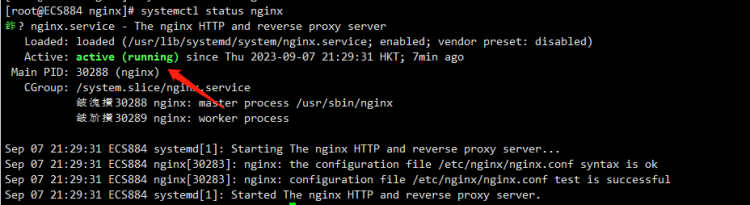
如果一切正常,输出应该是“Active: active (running)”或者类似的信息。